
Metal roofing services in Martinsburg, WV, are often discussed in the context of durability and long-term performance. Homeowners researching roofing options usually come across it while browsing an online website, but the topic itself deserves a neutral, fact-based explanation. In West Virginia, where weather conditions vary significantly throughout the year, the lifespan of a metal roofing system depends on material quality, environmental exposure, and maintenance practices rather than marketing claims.
Typical Lifespan of Metal Roofing
Depending on the metal type, metal roofs generally last for 40 to 70 years in West Virginia. Steel roofs, especially if galvanized or Galvalume-coated, are typically good for many years. Aluminum roofing tends to last even longer as it is highly resistant to corrosion. Besides, if properly installed and maintained, copper and zinc roofing can last more than 70 years. The lifespan of metal roofs compared to asphalt shingles is much longer, as the latter usually need to be replaced after 15 to 25 years.
Effect of West Virginia Climate
Martinsburg and the adjacent Eastern Panhandle have hot summers, cold winters, heavy rainfall, and some snowfall. Such climatic conditions are major determinants of the lifespan of a roof. Metal roofs are good at temperature changes since they can expand and contract without breaking. Besides, they allow rain and snow to slide off quickly, thus avoiding water retention, which may cause damage to other types of roofs. Nevertheless, places where humidity and tree cover are common may need regular maintenance in order to avoid the accumulation of debris and moisture, and related wear.
Material selection and coatings
The metal type and the protective coatings are very important factors in determining the length of a roof’s service life. Most residential metal roofs in West Virginia are made of steel panels coated with layers of zinc for rust prevention. On top of that, high-quality paint systems and finishes offer additional protection against UV radiation and weathering. More costly aluminium roofs naturally resist corrosion and are thus commonly chosen for damp areas. Thick-gauge metals also generally have a longer life as they are less easily dented and structurally fatigued.
Installation quality and design elements
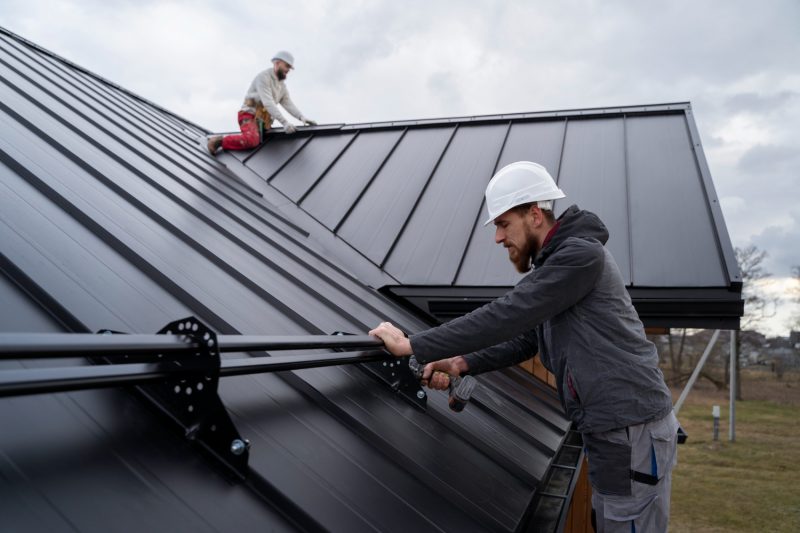
The metal roofing system’s life expectancy depends largely on the installation practices. Correct fastening methods, sufficient ventilation, and appropriate underlayment are among the main factors leading to efficient performance over time. Panels that are not properly installed may loosen with time, causing leaks and accelerated decay. The pitch and design of the roof also influence its durability; water and debris run off faster on steep roofs, thus the system is less loaded. In Martinsburg, compliance with local building codes is a guarantee of weatherproof roofing.
Maintenance and inspection routines
Metal roofing is generally considered to require little maintenance; however, regular inspections will significantly add to its service life. Experts usually advise homeowners to examine the roof once every couple of years for loose fasteners, deteriorated sealant, and worn-out surfaces. Clearing gutters and getting rid of leaves will also stop water from pooling at the edges and in the flashing areas. In West Virginia, it is crucial to carry out winter inspections in order to check for snow or ice damage.
Long-Term Performance Expectations
Over a period of several decades, metal roofing products, when tested, have shown to be structurally sound and resistant to weather conditions. Although some small patches might be needed, it is very rare that a complete change of the roof is necessary during the first few decades. This dependability over time is the main reason why metal roofing businesses in Martinsburg, WV, are still emphasizing the performance of the whole lifecycle rather than just on the short-term gains.
Conclusion
The average lifespan of metal roofing systems in West Virginia reflects a combination of material durability, climate compatibility, and proper care. Homeowners seeking factual information often consult a roofing professional’s website to understand realistic expectations, but understanding the underlying factors provides clearer insight into why metal roofs remain functional for generations.